

 GIVE US A CALL
Your IRA Can Be a Landlord — Here’s What You Need to Know
Using an IRA for rental properties is not only legal — it can be one of the most powerful ways to grow your retirement wealth tax-advantaged, outside the stock market.
Quick Answer: How Does an IRA Work for Rental Properties?
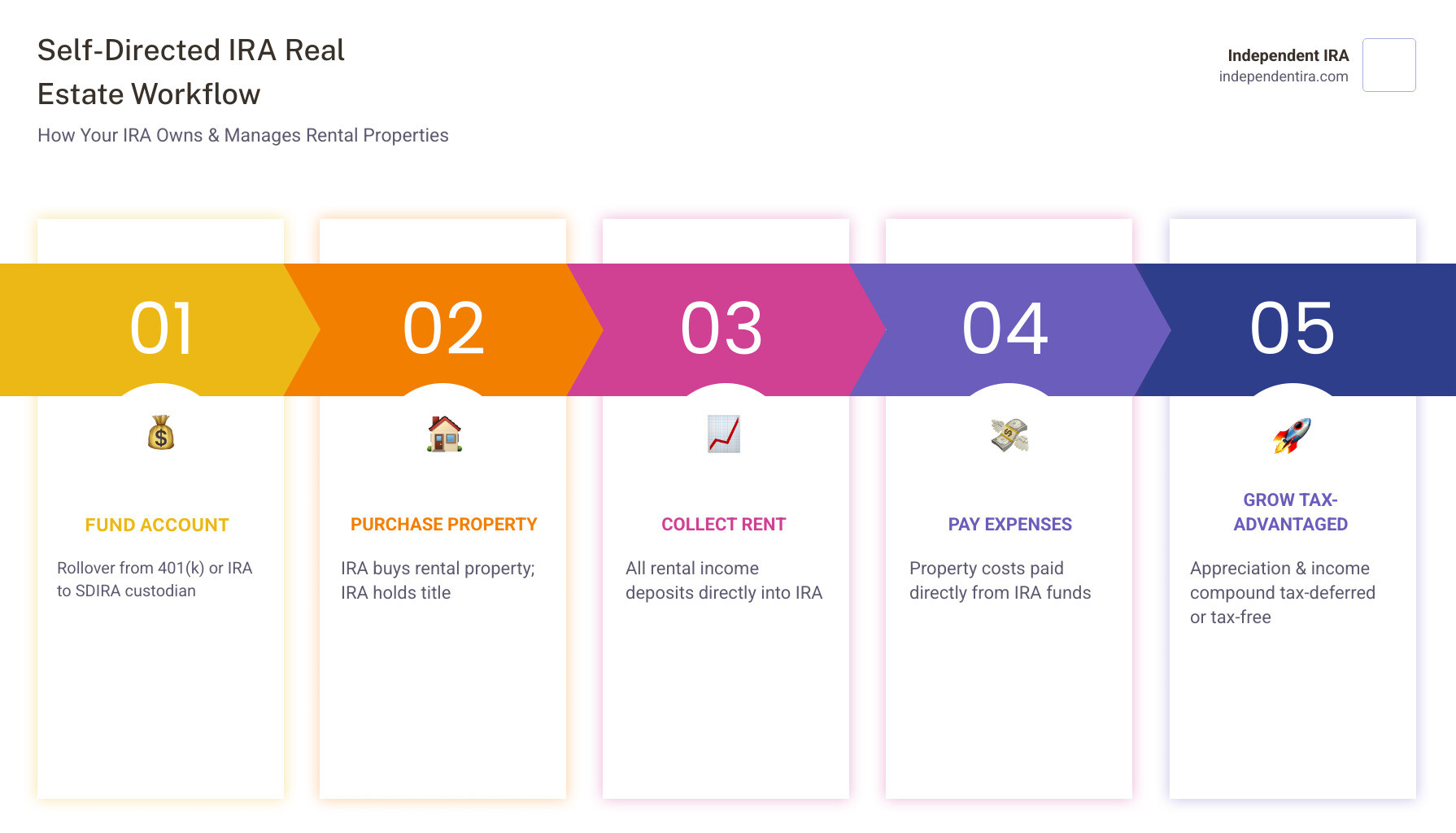
- Open a Self-Directed IRA (SDIRA) with a specialized custodian (not a standard brokerage)
- Fund it via a rollover from an existing 401(k) or IRA
- Use the IRA to purchase a rental property — the IRA owns the property, not you personally
- All rental income flows directly back into the IRA
- All property expenses are paid directly from the IRA
- Growth is either tax-deferred (Traditional SDIRA) or tax-free (Roth SDIRA)
U.S. home prices have climbed roughly 40% since 2020. Meanwhile, many investors in their 50s are watching their retirement savings sit in mutual funds they didn’t choose and can’t control.
If you already understand real estate — how to spot a good market, evaluate a property, and think long-term — there’s a strong case for putting that knowledge to work inside your retirement account.
But there’s a catch. The IRS has strict rules about how you can use an IRA to hold real estate. Get them right, and you build serious tax-advantaged wealth. Get them wrong, and you could face a tax bill that wipes out years of gains.
This guide covers everything you need to know — from the basics of how SDIRAs work, to prohibited transactions, financing rules, and how to set up a Checkbook IRA for faster deal-making.
Understanding the Self-Directed IRA for Rental Properties
When most people think of an IRA, they think of the “set menu” offered by big-box brokerages: stocks, bonds, and mutual funds. But as we move through May 2026, more investors are realizing that the IRS actually allows a much broader “cookbook.”
To invest in tangible assets like real estate, you need a specific vehicle. While a standard brokerage account is like a restaurant where you can only order what’s on the menu, a Self-Directed IRA (SDIRA) is like having your own kitchen. You decide what goes into the pot.
By utilizing Self Directed IRA Control, you shift the decision-making power from a fund manager to yourself. This is particularly relevant given that real estate professionals have increased their SDIRA openings by 22% year-over-year since 2021. They know the market, and they want their retirement funds to reflect that expertise. You can explore our full range of Services to see how these accounts are structured to support your goals.
What is a Self-Directed IRA (SDIRA)?
A Self-Directed IRA is functionally the same as a traditional or Roth IRA in the eyes of the IRS regarding contribution limits and tax status. The difference lies entirely in the custodian.
Standard custodians are designed for high-volume, liquid paper assets. They aren’t set up to hold a deed to a house or process a plumbing bill. A specialized SDIRA custodian, like our team at Self Directed IRA San Diego, is equipped to handle these alternative investments. In this arrangement, the custodian holds the assets for you, but you provide the “Direction of Investment.” You find the property, and you tell the custodian to buy it.
Can You Buy Rental Properties with an IRA?
Yes, and the variety of properties might surprise you. When using an IRA for rental properties, you aren’t limited to just single-family homes. You can diversify your portfolio with:
- Residential Properties: Duplexes, townhomes, and apartment complexes.
- Commercial Real Estate: Office buildings, retail spaces, or warehouses.
- Raw Land: Holding land for future appreciation or development.
- Unconventional Assets: Even boat slips and mobile homes are fair game.
The key is that the property must be for investment purposes only. You can view more about these Real Estate IRA Investment Options to see what fits your strategy.
IRS Compliance: Prohibited Transactions and Disqualified Persons
The IRS grants you incredible tax breaks for your retirement savings, but they want to ensure those funds are truly for your future retirement, not your current lifestyle. This is where the “Arm’s Length” rule comes in. Everything in your SDIRA must be kept at a distance.
If you cross that line, it’s called a prohibited transaction. The most common violation is “self-dealing”—using the IRA to benefit yourself or your family today rather than your account in the future. To stay compliant, you must understand the rules outlined in IRA1/2.
Who Qualifies as a Disqualified Person?
The IRS defines “disqualified persons” as those who cannot have direct dealings with your IRA assets. This includes:
- You (the account owner) and your spouse.
- Lineal Descendants: Your children, grandchildren, and their spouses.
- Ancestors: Your parents and grandparents.
- Entities: Any business where you or another disqualified person owns 50% or more.
Interestingly, siblings, aunts, uncles, and cousins are generally not considered disqualified persons. However, you should always consult with a professional before renting to your favorite nephew to ensure the transaction is at fair market value.
Managing Your IRA for Rental Properties Without “Sweat Equity”
This is the rule that trips up many “DIY” landlords. You cannot perform “sweat equity” on a property owned by your IRA.
- No Painting: You cannot spend a Saturday painting the kitchen to save money.
- No Repairs: You cannot fix a leaky faucet yourself.
- No Management Fees: You cannot pay yourself a fee to manage the property.
All labor must be performed by a third party and paid for directly by the IRA. Think of yourself as the “CEO” of your retirement account, not the “Maintenance Man.” You can direct the strategy, but you must hire the contractors. This is why many investors use professional 401k Services San Diego Real Estate IRA San Diego to ensure their management structure remains compliant.
Financing Your Investment: Non-Recourse Loans and UDFI Taxes
While many people buy IRA real estate with 100% cash, you can use leverage. However, you cannot walk into a bank and get a standard mortgage. Why? Because the IRS prohibits you from personally guaranteeing a loan for your IRA.
Instead, you must use a non-recourse loan. This is a loan where the only collateral is the property itself. If the IRA defaults, the bank can take the house, but they cannot come after you personally or the rest of your IRA funds.
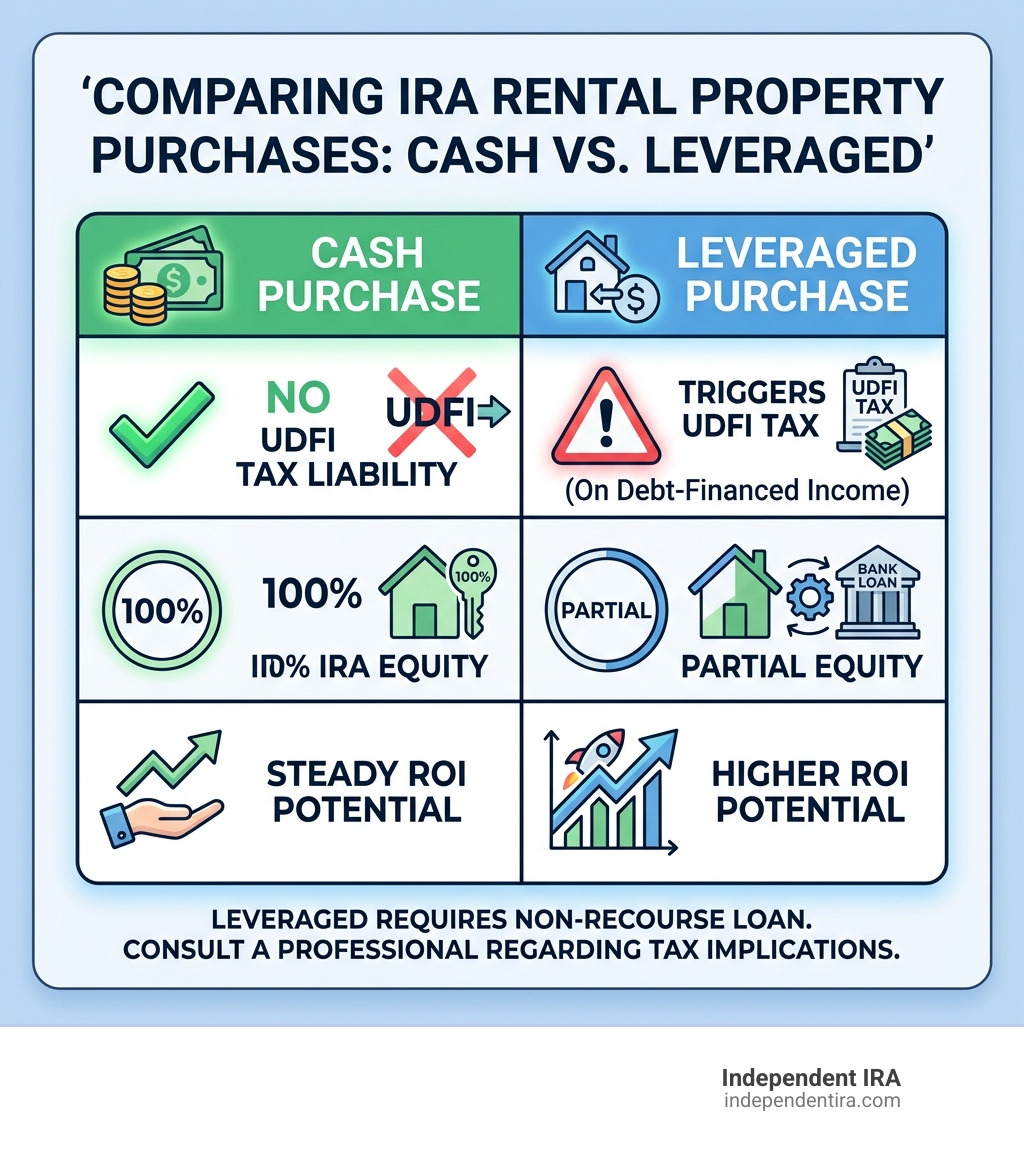
Because non-recourse loans are riskier for the bank, expect to put down 30% to 40% and pay a slightly higher interest rate. If you’re looking into these options, our expertise in Private Equity Private Lending San Diego can help you navigate the landscape.
Understanding Unrelated Debt-Financed Income (UDFI)
When your IRA uses borrowed money to make money, the IRS wants a piece of the action. This is known as UDFI (Unrelated Debt-Financed Income), which is a subset of UBTI (Unrelated Business Taxable Income).
If your IRA owns a property that is 50% debt-financed, then 50% of the net income is subject to UDFI tax. In 2024, these trust tax rates reached 37% at just $14,450 in income. While this sounds scary, you only pay tax on the leveraged portion of the profit, and you can still take deductions for depreciation and expenses on that same percentage.
Traditional vs. Roth SDIRA for Real Estate
Choosing between a Traditional or Roth SDIRA is a high-stakes decision for real estate:
- Traditional SDIRA: Contributions may be tax-deductible. Growth is tax-deferred, but every dollar you withdraw in retirement is taxed as ordinary income.
- Roth SDIRA: You contribute after-tax dollars, but the growth and qualified distributions are 100% tax-free.
Imagine buying a rental property for $200,000 in a Roth SDIRA today. If it appreciates to $500,000 over 15 years while generating $2,000 a month in rent, every penny of that profit and rent could be yours tax-free in retirement. As of 2025/2026, the IRA contribution limit remains $7,000 ($8,000 if age 50+), so most investors fund these accounts via rollovers from larger 401(k) balances.
Gaining Speed with Checkbook Control and IRA-Owned LLCs
One of the biggest complaints about SDIRAs is “custodial friction.” If a pipe bursts on Christmas Eve, you don’t want to wait for a custodian to approve a check to the plumber.
This is where Checkbook Control comes in. By setting up an IRA-owned LLC, your IRA becomes the 100% owner of a business entity. You are the manager of that LLC. The IRA funds the LLC’s bank account once, and from there, you can write checks or use a debit card for property expenses instantly.

This structure is a game-changer for active investors. You can learn more about how this works through our Checkbook services.
Setting Up Your Checkbook IRA for Rental Properties
Setting up this structure involves a few specific steps:
- Establish the SDIRA: Open your account with a custodian.
- Create the LLC: A specialized LLC is formed (often in a state with low fees) with a specific operating agreement that complies with SDIRA regulations.
- Fund the LLC: The custodian “invests” your IRA funds into the LLC.
- Open a Business Bank Account: You open a dedicated account for the LLC where you have signing authority.
We provide the expertise to handle this Checkbook 2 setup correctly, ensuring your operating agreement meets all legal requirements.
Handling Rental Income and Property Expenses
With a Checkbook IRA, the flow of money is “clean.”
- Income: Tenants pay rent directly to the LLC bank account.
- Expenses: You pay taxes, insurance, and repairs directly from that same account.
It is vital to never mix these funds with your personal money. Even accidentally paying for a $50 repair with your personal credit card can be viewed as an indirect contribution to the IRA, potentially triggering penalties. Keep it separate, keep it clean.
The Step-by-Step Guide to Acquiring IRA Real Estate
Ready to pull the trigger? The process of using an IRA for rental properties follows a logical path, but the details matter — especially the titling.
Titling Requirements for IRA-Owned Properties
You are not the owner of the property; your IRA is. This means the deed must be titled correctly. If you are using a custodian without an LLC, the title usually looks like this:
- XYZ Trust Company, Custodian FBO [Your Name] IRA
If you are using an LLC, the title will be in the name of the LLC. Improper titling is one of the fastest ways to have a transaction rejected or, worse, flagged by the IRS. We ensure all your documents are correctly vested to protect your account’s status at Self Directed IRA San Diego.
Risks and Maintenance: Avoiding the Liquidity Trap
Real estate is famously illiquid. You can’t sell a bedroom to pay for a new roof. This creates a “liquidity trap” in an IRA. If your property needs a $10,000 repair and your IRA only has $2,000 in cash, you have a problem. You cannot simply use your personal savings to bridge the gap.
To avoid this:
- Maintain a Cash Cushion: We recommend keeping at least 10-15% of the property value in cash within the IRA.
- Plan for RMDs: If you have a Traditional SDIRA, you must take Required Minimum Distributions starting at age 73 (or 75 depending on current law). You’ll need enough cash in the account to satisfy these distributions without being forced to sell the property.
Frequently Asked Questions about IRA Real Estate
Can I live in a property owned by my IRA?
Absolutely not. Not for a year, not for a weekend, not even for a night. The property must be 100% for investment. If you want to live in the property eventually, you must wait until you are eligible for a distribution, take the property out of the IRA (and pay the associated taxes), and then move in.
Can my family members rent from my IRA-owned property?
No. As discussed, your spouse, parents, and children are disqualified persons. Renting to them—even at fair market value—is considered a prohibited transaction. The IRS views this as providing a benefit (housing) to a family member using tax-advantaged funds.
What happens if I violate SDIRA rules?
The penalties are severe. If you engage in a prohibited transaction, the IRS may treat your entire IRA as having been distributed on January 1st of that year. This means you would owe ordinary income tax on the entire value of the account, plus a 10% early withdrawal penalty if you are under 59.5. On a $500,000 account, this mistake could cost you over $200,000 in taxes and penalties.
Conclusion
The path to becoming a “Tax-Free Landlord” is paved with rules, but for those who value control and tangible assets, it is a journey well worth taking. By using an IRA for rental properties, you aren’t just betting on a ticker symbol; you’re betting on a neighborhood, a property, and your own ability to build wealth.
At Independent IRA in San Diego, we specialize in helping investors take the wheel of their retirement future. Whether you need a simple custodial account or a complex Checkbook LLC structure, we provide the one-stop-shop expertise to keep you compliant and in control.
Start your real estate investment journey with Independent IRA today and see how your retirement account can do more than just follow the market—it can lead it.