

 GIVE US A CALL

Before choosing a self-directed IRA custodian, compare the total cost of the transactions you expect to make, not just the advertised annual fee. Standard SDIRA transaction fees typically range from $50 to $500 depending on the asset class, cash movement type, and whether your provider bills flat rates or asset-based percentages. Using a structured custodian cost comparison helps you calculate how ongoing buy, sell, and processing charges affect overall retirement account performance. According to the IRS, prohibited transaction rules under IRC Section 4975 require custodians to review each alternative asset purchase for compliance, which is why these fees exist in the first place. I’m Brian Davis, and this guide will help you spot the fees that matter most before you commit.
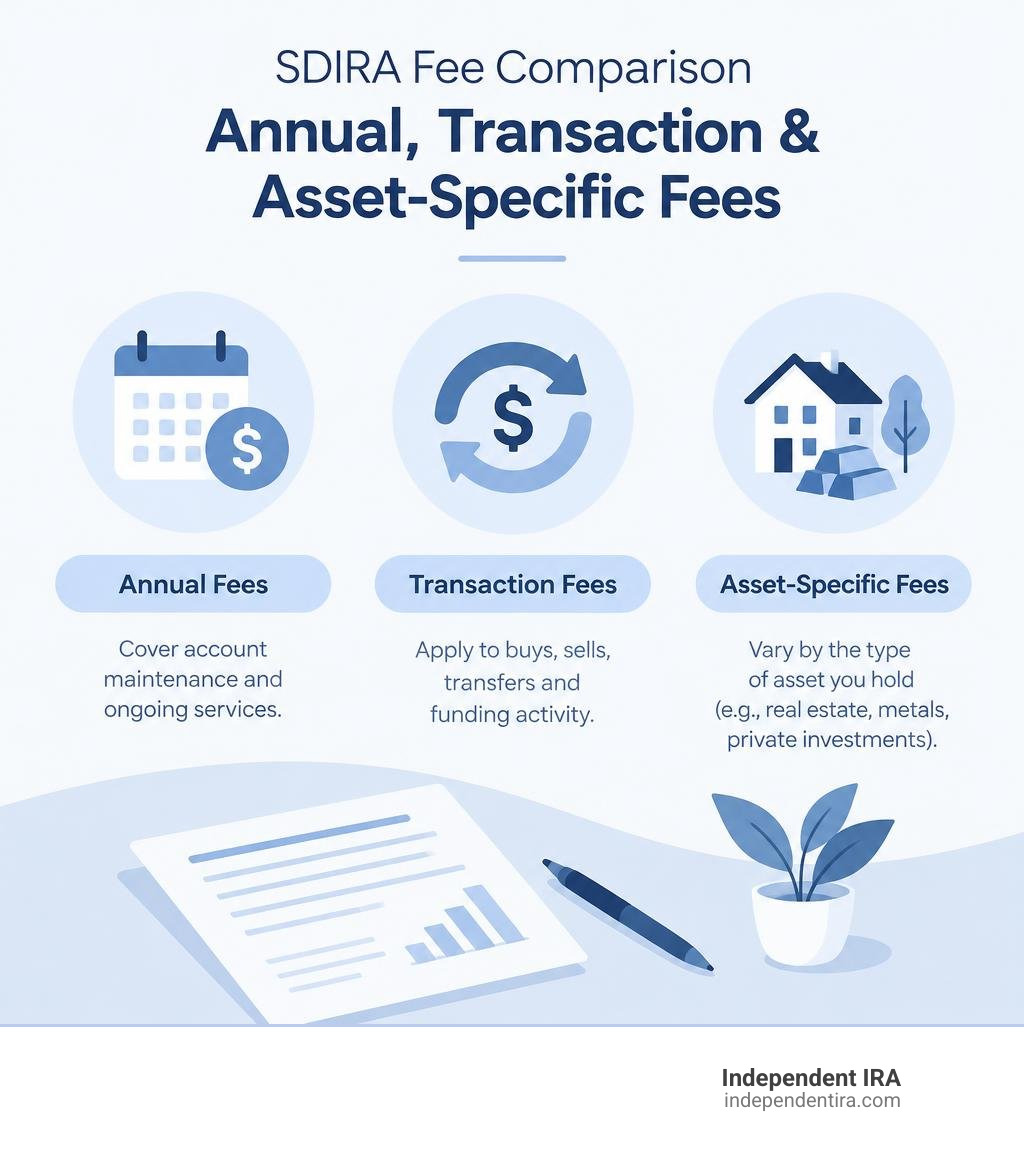
Understanding SDIRA Transaction Fees and Account Structures
When you step outside public equities, the mechanics of managing your retirement account change dramatically. Traditional brokerage firms make their money through trading spreads, margin interest, or fund expense ratios, allowing them to offer $0 commissions on standard stock trades. However, a Self-Directed Individual Retirement Account (SDIRA) holds non-traditional assets like real estate, private equity, debt instruments, and precious metals.
Because these alternative investments involve customized legal documents, bespoke title ownership, and continuous IRS reporting, custodians must dedicate manual staff time to account administration and compliance oversight. Consequently, custodians charge transactional and administrative fees to facilitate these processes.
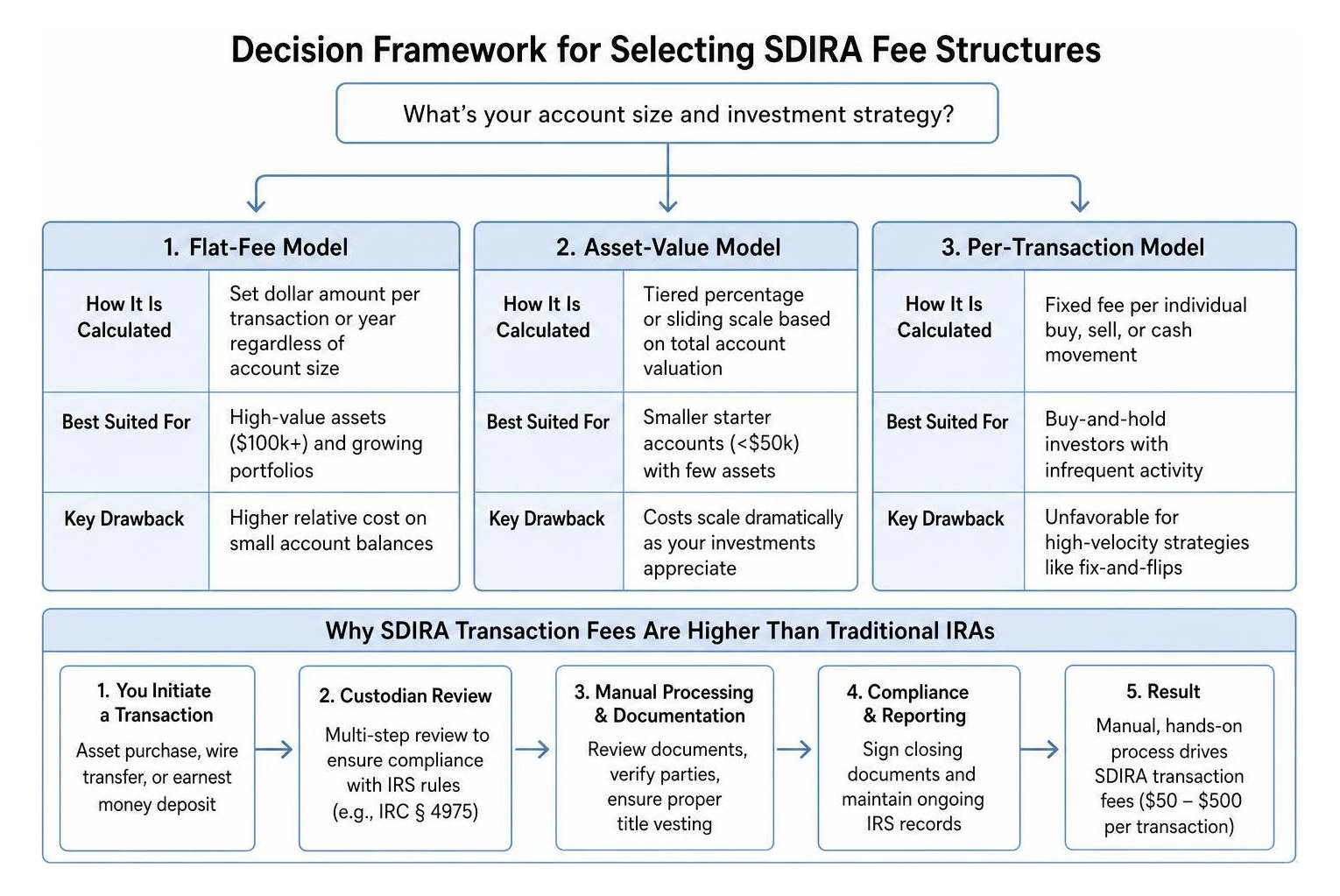
Every time you execute an asset purchase, process a wire transfer, or request an earnest money deposit, your custodian performs a multi-step review to ensure the transaction complies with IRS rules (such as preventing prohibited transactions under IRC Section 4975). Depending on the institution you partner with, these overhead costs are packaged into either a flat-rate pricing schedule or an asset-value-based model.
| Fee Model Type | How It Is Calculated | Best Suited For | Key Drawback |
|---|---|---|---|
| Flat-Fee Model | Set dollar amount per transaction or year regardless of account size | High-value assets ($100k+) and growing portfolios | Higher relative cost on small account balances |
| Asset-Value Model | Tiered percentage or sliding scale based on total account valuation | Smaller starter accounts (<$50k) with few assets | Costs scale dramatically as your investments appreciate |
| Per-Transaction Model | Fixed fee per individual buy, sell, or cash movement | Buy-and-hold investors with infrequent activity | Unfavorable for high-velocity strategies like fix-and-flips |
Core Differences in SDIRA Transaction Fees vs Traditional IRAs
Standard brokerage platforms operate using automated electronic clearing networks. When you purchase 100 shares of an index fund, an algorithm matches the order in milliseconds with zero human intervention.
In contrast, SDIRA operations require hands-on document review. When purchasing an alternative asset, the custodian must:
- Verify that the vesting on the title reads properly (e.g., [Custodian Name] FBO [Your Name] IRA).
- Confirm that no disqualified persons are part of the transaction chain.
- Review operating agreements, subscription booklets, or promissory note contracts.
- Secure and sign closing documentation on behalf of the retirement trust.
This manual processing explains why sdira transaction fees can range from $50 to $500 per transaction, rather than the zero-dollar commission models found in conventional brokerage accounts.
Flat-Rate vs Asset-Value Fee Schedules
Choosing between a flat-fee schedule and an asset-based schedule can mean a difference of tens of thousands of dollars over the lifetime of your retirement account.
With an asset-value schedule, your annual fee increases as your investments grow. If your self-directed account holds a real estate property that appreciates from $200,000 to $600,000, your annual custodial fee can double or triple simply because you made a profitable investment. Conversely, a flat-fee model charges the exact same rate whether your asset is worth $50,000 or $1,000,000. For investors targeting substantial capital appreciation, flat-rate pricing provides predictable expenses and protects long-term gains.
Transaction Fee Variations Across Alternative Asset Classes
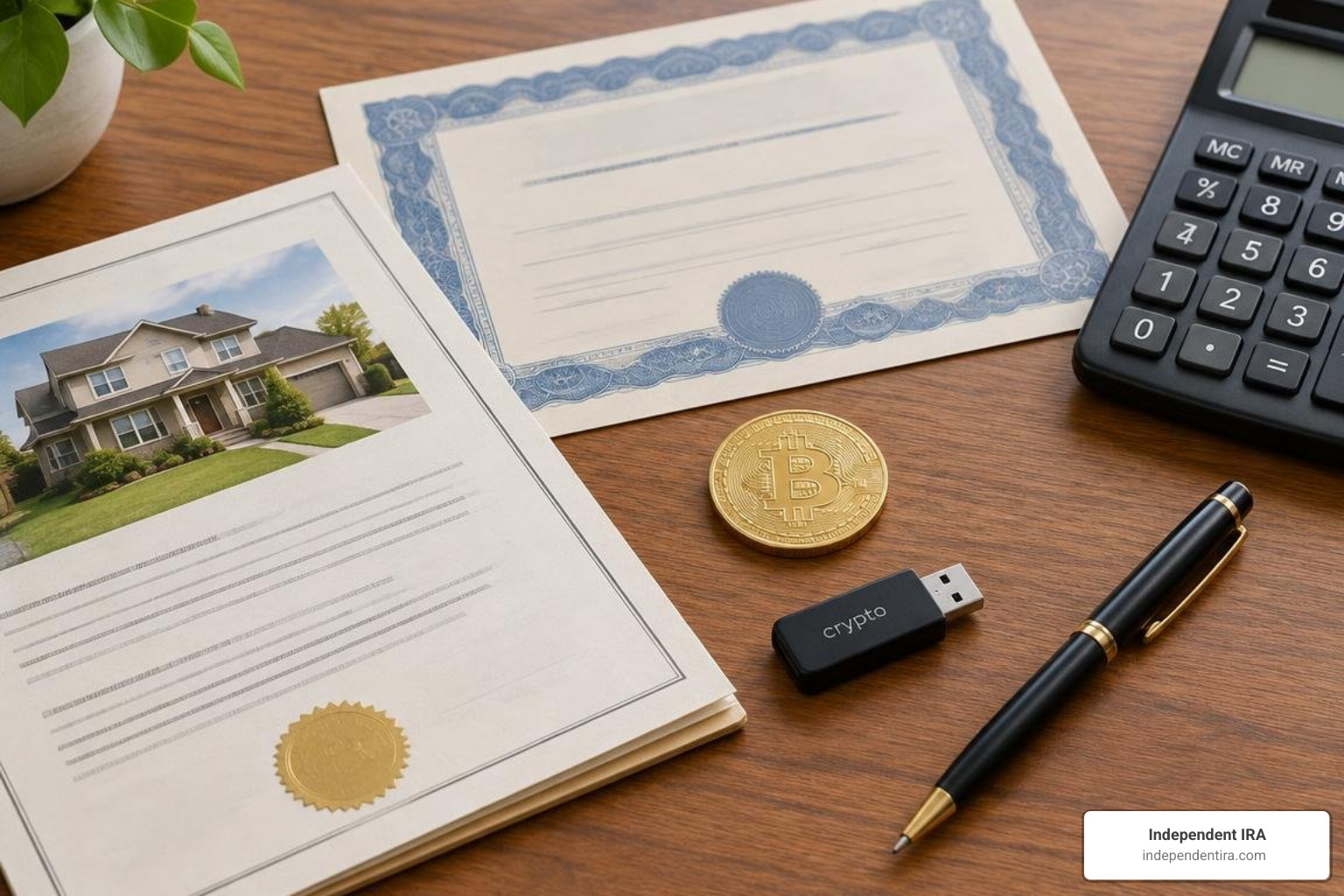
Fee structures vary widely depending on the asset class you select. SDIRA custodians face varying levels of administrative complexity and regulatory recordkeeping depending on whether they are holding a rental property, private equity shares, or digital currency. In fact, approximately 30% of SDIRA custodians charge a separate transaction fee for alternative assets, averaging around $150 per transaction.
Real Estate and Private Lending Expenses
Real estate is an IRS-permitted asset frequently held inside an SDIRA, but it can also be transaction-intensive. If your account directly owns real estate, every operational cash flow must pass through the custodian’s hands.
Typical costs associated with real estate and private debt investments include:
- Purchase and Sale Processing: Flat transaction fees of $100 to $300 per property purchase or disposition. Real estate transactions within an SDIRA often incur fees of 1% to 2% of the asset value when combined with title, escrow, and document review costs.
- Earnest Money Disbursements: $25 to $100 per check or wire.
- Ongoing Expense Processing: If tenants pay rent directly to the custodian, or if the custodian must write checks for property taxes, insurance, and contractor repairs, fees can range from $10 to $50 per check written.
- Note Servicing Review: Setting up private mortgages or unsecured promissory notes involves legal document reviews that cost between $100 and $250 per note.
To avoid being nickel-and-dimed on monthly repairs and rental income processing, many investors implement specialized self-directed real estate IRA solutions that streamline transaction handling.
Private Equity, Venture Capital, and Digital Assets
Investing in startups, syndications, or venture funds presents a different operational profile. These are typically buy-and-hold investments, meaning your recurring transaction frequency is low, but the initial entry requires detailed paperwork.
- Subscription Document Review: Processing private placement memorandums (PPMs) and capital commitments generally costs between $150 and $350.
- Capital Calls: When a private equity fund issues a capital call, your custodian will charge a transaction fee ($50 to $150) plus wire fees ($20 to $40) to deliver the funds.
- Cryptocurrency and Digital Assets: Custodians providing direct crypto execution often charge a transaction fee ranging from 1% to 2% on trades, alongside digital asset cold-storage custody fees that range from 0.05% to 0.20% annually.
Uncovering Hidden SDIRA Processing and Maintenance Charges
When reviewing a custodian’s fee schedule, the headline numbers rarely tell the whole story. Average annual SDIRA fees, including base maintenance and standard transaction charges, typically sit between $200 and $1,000. However, ancillary administrative items can quickly push that figure higher if you do not understand the fine print. Reviewing common hidden fee structures ahead of time helps keep total expenses transparent.
Administrative and Ancillary Surcharges
Minor operational tasks often come with unexpected price tags. Look out for these secondary surcharges:
- Outbound Wire Transfers: $25 to $50 per wire (essential for fast-moving real estate closings).
- Expedited Processing Fees: $100 to $250 if you need closing documents or earnest money handled within 24 to 48 hours.
- Paper Statements and Archiving: $5 to $15 per month if electronic statements are not explicitly selected.
- Asset Re-Registration: $50 to $150 when updating LLC certificates or deed assignments.
- Account Termination or Transfer Out: $150 to $350 when closing an account or rolling funds to another provider.
Valuation and Special Asset Handling Fees
The IRS requires SDIRA custodians to report the Fair Market Value (FMV) of every account annually on Form 5498. Because alternative assets do not have live ticker symbols, custodians must manually verify and record their values.
Many custodians charge a Fair Market Valuation fee ($50 to $200 per asset, per year) simply to log the updated appraisal or valuation document you submit. If you hold non-standard assets—such as offshore real estate or mineral rights—special asset review surcharges can add an extra $200 to $500 annually.
Practical Steps to Evaluate Custodians and Lower Total Costs
Selecting the right partner requires weighing costs against customer service, responsiveness, and execution speed. A custodian with rock-bottom fees that takes three weeks to fund an escrow account can cause you to miss a time-sensitive real estate purchase.

When vetting partners, use a structured methodology for evaluating alternative asset custodians and ensure you align with a thoroughly vetted, compliant custodial partner. At Independent IRA, Brian Davis works closely with investors to map their anticipated deal flow against available account models, eliminating unexpected charges before paperwork is submitted.
Strategies to Minimize SDIRA Transaction Fees with Checkbook Control
The most effective way to eliminate per-transaction fees on active investments is by establishing Checkbook Control.
Under a Checkbook IRA structure, your self-directed account makes a single transaction: it funds a newly formed, dedicated Limited Liability Company (LLC). The IRA owns 100% of the LLC units, and you serve as the non-compensated LLC manager.
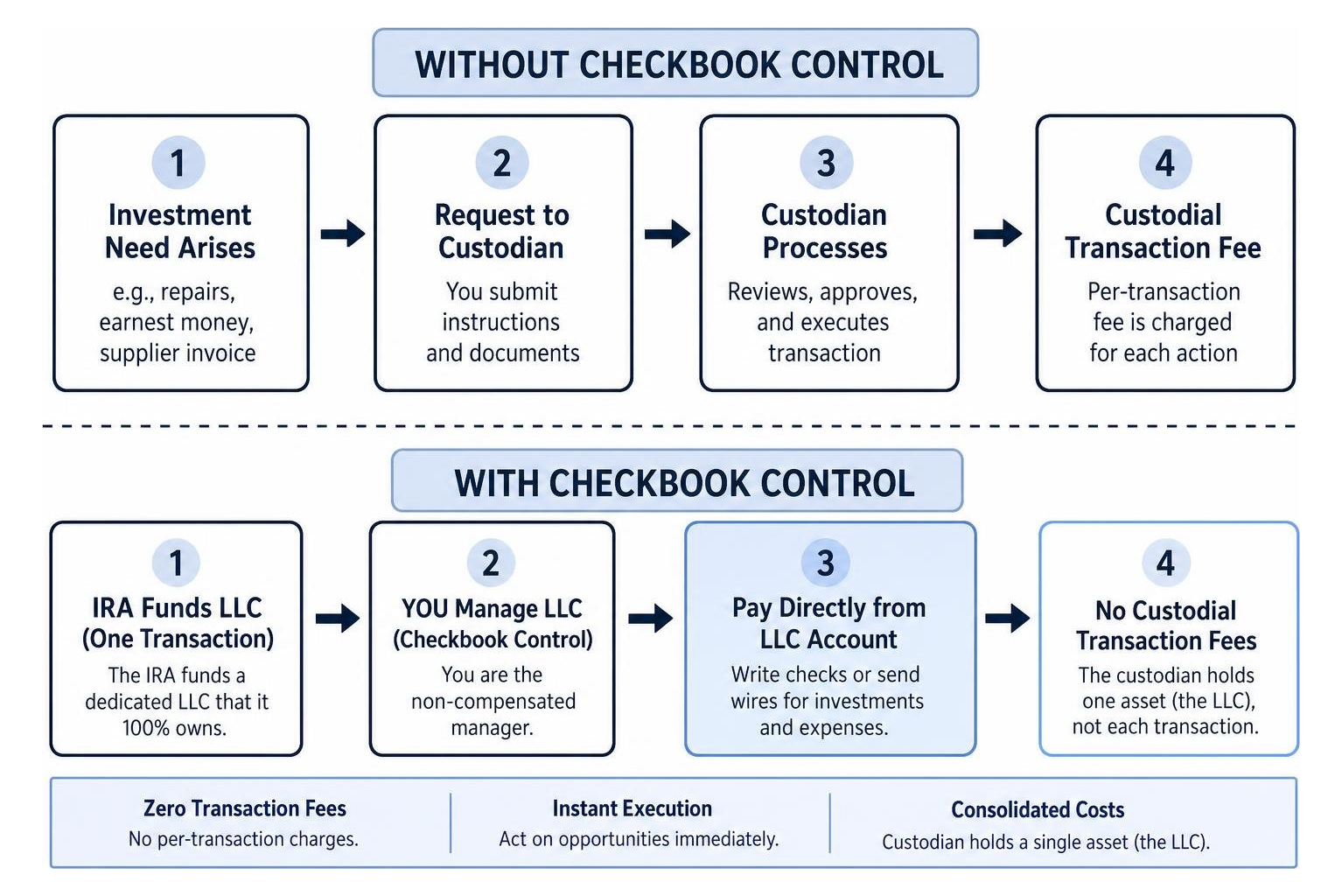
By utilizing checkbook control, you realize three major operational advantages:
- Zero Transaction Fees: You write checks or send wires directly from a dedicated business checking account for repairs, earnest money, and supplier invoices without paying custodian processing charges.
- Instant Execution: You execute contracts on the spot without waiting days for custodial approval.
- Consolidated Costs: The custodian holds a single asset (the LLC), which minimizes recurring annual holding costs.
To learn how to implement this setup correctly without violating IRS operational rules, explore our resource on checkbook IRA control.
Self-Directed Solo 401(k) vs SDIRA Cost Efficiencies
If you are self-employed or operate a small business with no full-time non-owner employees, a Self-Directed Solo 401(k) offers even greater cost efficiency than an SDIRA.
With a Solo 401(k), the IRS permits you to act as the trustee of your own plan. This creates distinct cost advantages:
- No Custodial Middleman: Because you are the plan trustee, you hold checkbook control by default without paying for a separate LLC setup.
- No Transaction or Holding Fees: You pay zero transactional fees when acquiring real estate, private notes, or digital assets.
- Simplified Reporting: There is no annual IRS filing requirement (Form 5500-EZ) until your total plan assets exceed $250,000.
Frequently Asked Questions About SDIRA Costs
What is the typical range for SDIRA transaction fees?
Standard SDIRA transaction fees typically range from $50 to $500 per transaction depending on the complexity of the asset class. Routine actions like issuing a check or initiating a domestic wire run between $20 and $50, whereas executing private equity investments, notes, or real estate contracts generally incurs review fees between $100 and $300.
Can transaction fees be paid with personal funds outside the SDIRA?
Yes. The IRS allows account owners to pay recurring custodial, administrative, and account maintenance fees out of pocket using non-IRA personal funds without those payments counting toward annual contribution limits. However, transaction costs tied directly to the asset—such as earnest money, property taxes, or capital improvements—must be paid strictly from the retirement account itself to prevent prohibited transaction violations.
How do transaction fees impact smaller account balances?
Transaction fees have a disproportionately large impact on smaller accounts (balances under $50,000). For example, if you hold a $30,000 account and pay $600 annually in transaction and maintenance charges, fees eat up 2.0% of your total balance. That creates substantial fee drag, making it harder for the account to compound. Smaller accounts should look for low baseline flat-fee schedules or consider scaling through asset types with minimal recurring transaction requirements.
Are SDIRA transaction fees regulated by the IRS?
The IRS does not set legal caps or regulatory limits on what self-directed custodians can charge for their services. Custodial pricing is determined entirely by market competition and individual corporate pricing schedules. The IRS’s primary concern is compliance and reporting: ensuring that all assets are properly valued and that transactions comply with Section 4975 rules.
Before You Move Retirement Funds
Before rolling over funds from an existing employer plan or traditional brokerage account, take the time to calculate your projected annual deal volume. If your strategy involves buying a rental property or participating in private loans, relying on direct custodial execution can quickly result in hundreds or thousands of dollars in avoidable transaction surcharges.
At Independent IRA, we believe in transparent, straightforward pricing that gives you maximum control over your alternative assets. Whether you want to establish an entity-based checkbook IRA or structure a self-trusteed Solo 401(k), our team is here to help you protect your investment yields from administrative drag.
Explore our full range of self-directed retirement services to see which plan structure aligns with your investment strategy, or schedule an expert SDIRA consultation with us today to build your retirement portfolio with confidence.
This content is for informational and educational purposes only and does not constitute legal, tax, or investment advice. Rules, limits, and requirements may change. Consult a qualified tax advisor, attorney, or financial professional before making retirement planning or investment decisions. Independent IRA is an Authorized Agent of Accuplan Benefits Services and is not a custodian or trust company.