

 GIVE US A CALL
Yes, you can invest IRA in startups — but only through a self-directed IRA (SDIRA), and only if you follow strict IRS rules designed to prevent self-dealing. Here is what you need to know at a glance:
- You need a self-directed IRA. Standard IRAs held at traditional retail brokerages do not permit private startup investments.
- You must use a specialized SDIRA custodian. The custodian holds the investment on behalf of your IRA, keeping it inside the tax-sheltered structure.
- Prohibited transaction rules apply. Investing in a startup where you, your spouse, or certain family members have a role or ownership stake can trigger severe tax penalties.
- The entire IRA can be disqualified. A single prohibited transaction can cause your full IRA balance to be treated as a taxable distribution — potentially plus a 10% early withdrawal penalty if you are under 59½.
- Structure matters. How you hold the investment — directly through a custodian or via a Checkbook Control LLC — affects both flexibility and compliance risk.
The upside potential is real. One of the most cited examples in the SDIRA world is a PayPal co-founder who invested just under $2,000 of Roth IRA funds into early startup equity and ultimately accumulated a $5 billion windfall. That outcome is extraordinary, but it illustrates why self-directed retirement accounts are such a powerful vehicle for alternative assets like private company equity. The potential tax-free or tax-deferred growth that a well-structured SDIRA may offer can turn a well-timed startup bet into a powerful retirement asset.
The catch is that the rules governing SDIRA startup investments are genuinely complex, particularly for founders, family members, and anyone who plays an active role in the company. Getting the structure wrong does not just cost you the investment — it can unwind your entire retirement account. That is why understanding the mechanics of self-directed IRAs is the essential first step before committing a single dollar.
I’m Brian Davis, and throughout this guide I’ll walk you through everything you need to know to invest your IRA in startups the right way.
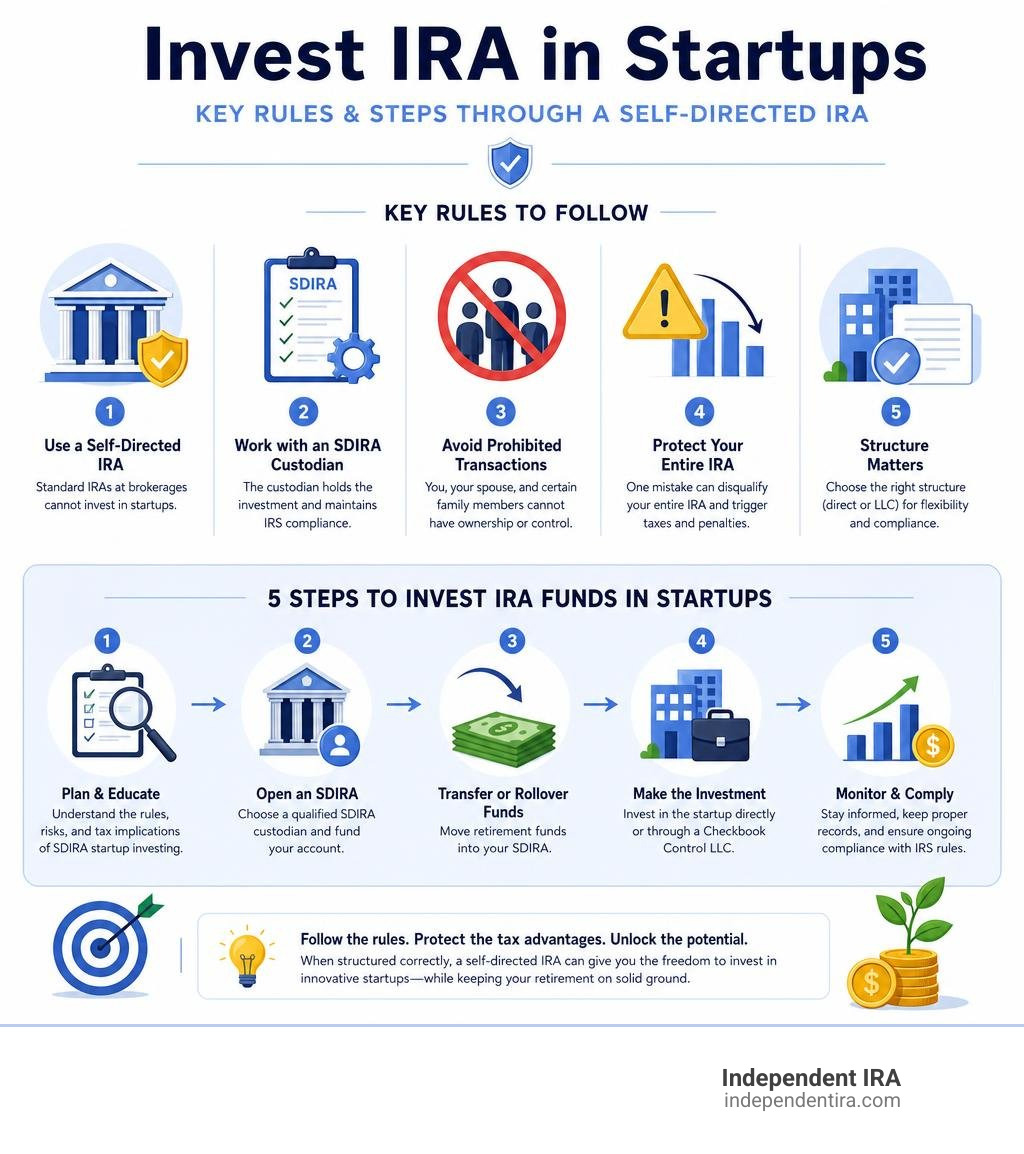
To get started, we need to understand that a traditional or Roth IRA held at a retail brokerage simply cannot hold non-publicly traded assets. If you want to allocate capital to early-stage businesses, you must transfer those funds to a specialized self-directed IRA custodian. This custodian acts as the passive administrator of your account.
While the custodian handles the IRS reporting and holds the asset, you retain complete investment control. This allows you to diversify away from Wall Street and put your money into private equity private lending san diego or early-stage tech companies.
However, because these assets do not trade on public exchanges, the administrative burden is higher. The IRS does not ban alternative investments, but it does place strict boundaries on who you can do business with when using your retirement funds. For a deeper dive into how this works in a Roth structure, see our guide on Investing in Startups Through a Roth IRA.
The Legal Minefield: Prohibited Transactions and Disqualified Persons
When you invest IRA in startups, you are playing in a highly regulated arena. The IRS is deeply concerned with “self-dealing”—the practice of using your tax-advantaged retirement funds to benefit yourself, your family, or your current businesses today, rather than securing your future retirement.
To prevent this, the Internal Revenue Code defines certain transactions as prohibited transactions and certain individuals as disqualified persons. If your IRA interacts with a disqualified person, the transaction is prohibited, and the tax consequences are severe.
Who exactly is a disqualified person? Under IRS rules, disqualified persons include:
- You (the IRA owner) and your spouse.
- Your lineal ascendants (parents, grandparents).
- Your lineal descendants (children, grandchildren) and their spouses.
- Any entity (LLC, corporation, partnership) where you or other disqualified persons collectively hold 50% or more of the voting power, capital, or profits.
- Officers, directors, or highly compensated employees of those entities.
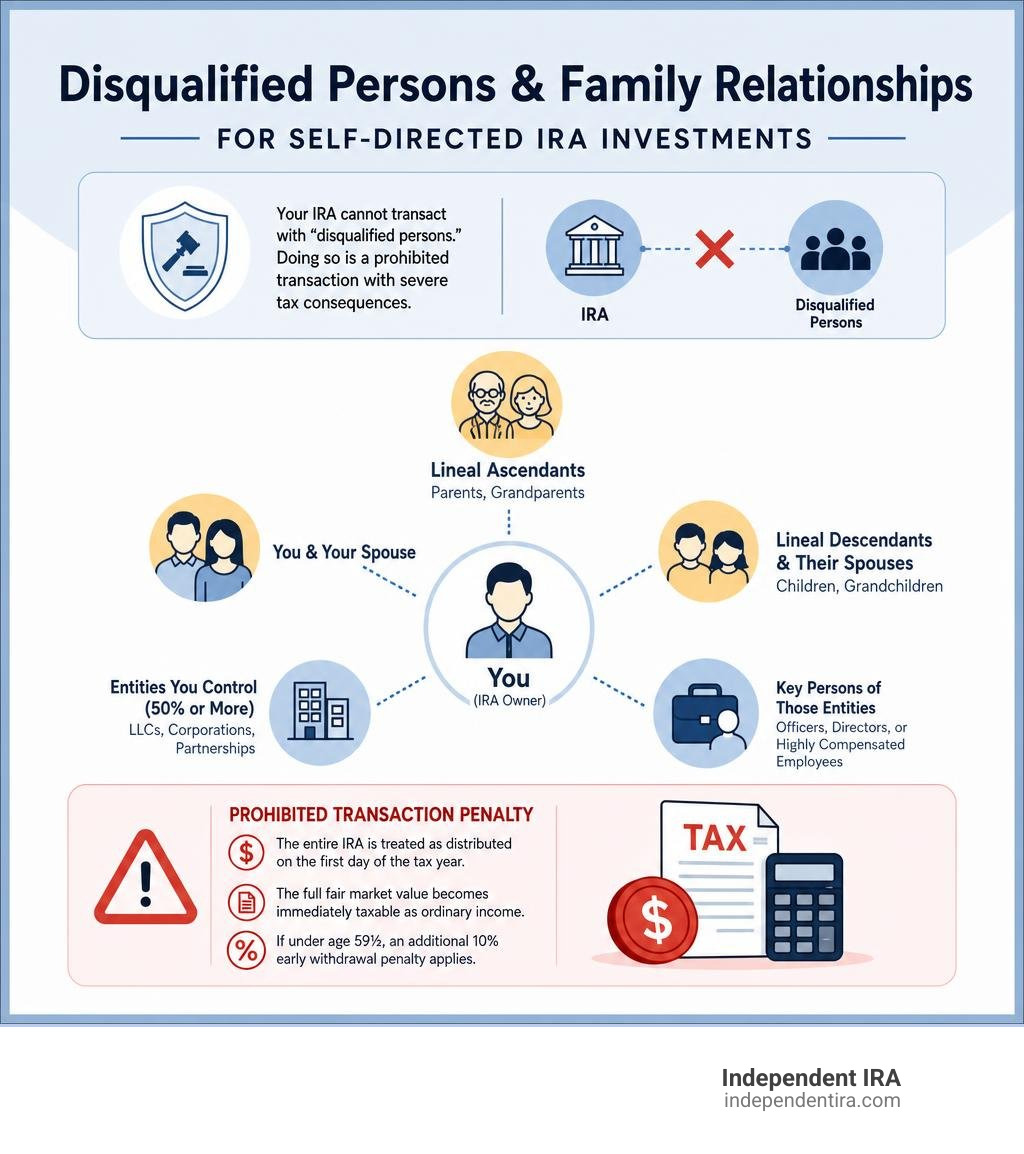
If your IRA purchases shares in a startup owned or run by any of these people, you have stepped directly into a legal minefield. For an in-depth breakdown of how these rules apply to founders specifically, you can read more about Navigating The Legal Minefield: Founder Investments In Roth IRAs – Employee Benefits & Compensation – United States.
If a prohibited transaction occurs, the IRS does not simply levy a small fine. Instead, the entire IRA is treated as if it distributed all of its assets on the first day of the tax year in which the violation occurred. The entire fair market value of the account becomes immediately taxable as ordinary income. If you are under the age of 59½, you will also face an additional 10% early withdrawal penalty.
How to Invest IRA in Startups Without Self-Dealing
To safely invest IRA in startups, every single transaction must be structured as an arm’s length transaction. This means the IRA must act as an independent, third-party investor seeking market-rate returns solely for the benefit of the retirement account.
You must maintain a strict fiduciary duty to your IRA. This means you cannot receive any personal, immediate benefit from the investment. For example:
- You cannot use SDIRA funds to buy shares in a startup that pays you a salary, consulting fee, or director’s fee.
- You cannot personally guarantee a loan made to the startup if your IRA is an investor.
- You cannot use startup office space or equipment funded by your IRA’s investment.
- You cannot mix your personal cash and SDIRA cash to buy shares in a way that gives you personal leverage or preferential terms.
The rule of thumb is simple: if a transaction benefits you or a close family member today, it is likely a prohibited transaction. The investment must exist purely to build wealth that you will touch only after you reach retirement age. To understand how to maximize these tax-sheltered returns safely, check out our insights on how to make your roth ira work harder than you do.
When Founders Face Prohibited Transactions When They Invest IRA in Startups
Founders face the steepest uphill climb when trying to invest IRA in startups they own. It is a natural instinct: you are building a company, you believe in its future, and you have retirement funds sitting in an old account that you would love to put to work.
However, the Department of Labor (DOL) and the IRS look at this under a microscope. The primary hurdle is the “best judgment” rule. As the fiduciary of your SDIRA, you are required to make investment decisions purely in the interest of the IRA. If you are also the founder, officer, or major shareholder of the startup, the IRS argues that your personal interest in the company’s success compromises your ability to make objective fiduciary decisions.
The DOL has issued several Advisory Opinions that highlight how easily a founder can trigger a prohibited transaction:
- The 50% Rule: If you and your disqualified family members own 50% or more of the startup, the company itself is a disqualified person. Your IRA cannot buy shares from or invest capital into the company, period.
- The Best Judgment / Fiduciary Conflict Rule: Even if your combined ownership is well below 50%, your role as an officer or director can still trigger a prohibited transaction. The DOL has indicated that if an IRA owner holds an officer position, even a tiny ownership stake (such as 1.17% combined with a spouse) could affect their best judgment as a fiduciary. In another case, holding 46.04% of voting power and 48.14% of shares was deemed a clear conflict.
- The Employee Exception: Generally, if you own less than 1% of a company and are a rank-and-file employee with no managerial or officer control, the DOL is unlikely to deem your fiduciary judgment compromised. But for founders, this is almost never the case.
Furthermore, timing is critical. You cannot “fix” a prohibited transaction after the fact. Attempting to cancel personally owned founder shares and re-issue them to your Roth IRA is a major violation. If the company is already established and you are acting as an officer, the entity is already a disqualified party.
If you are raising capital for your business or considering lending options, understanding these boundaries is vital. Explore our az guide to private lending with ira to see how debt structures differ from equity investments under SDIRA rules.
Structuring the Investment: SDIRA Custodians vs. Checkbook LLCs
When you decide to invest IRA in startups, you have two primary operational structures to choose from: a Custodian-Directed SDIRA or a Checkbook Control LLC.
1. Custodian-Directed SDIRA
In this traditional setup, your self-directed IRA custodian holds the private stock certificates directly. When the startup issues a capital call or asks for documentation, you must submit an Investment Authorization form to your custodian. The custodian reviews the documents for administrative feasibility, signs them on behalf of your IRA, and sends the funds.
While this keeps a second pair of eyes on your transactions, it can be slow. Startups often move fast, and processing delays can cause you to miss out on competitive investment rounds. Additionally, some custodians charge transaction fees for every document they sign or wire they send.
2. Checkbook Control LLC
To bypass this administrative bottleneck, many investors use a Checkbook Control LLC. In this structure, we help you establish a specialized single-member LLC that is owned 100% by your SDIRA. Your SDIRA custodian funds the LLC’s bank account, and you are named as the non-compensated manager of the LLC.
Because you are the manager of the LLC, you have signature authority over the LLC’s bank account. When you want to invest in a startup, you simply write a check or execute a wire transfer directly from the LLC’s bank account. The custodian does not need to approve every individual transaction because they only hold one asset on their books: your single-member LLC.
| Feature | Custodian-Directed SDIRA | Checkbook Control LLC |
|---|---|---|
| Transaction Speed | Slow (subject to custodian processing times) | Immediate (you write the check or wire funds) |
| Administrative Fees | High (often charged per transaction/asset) | Low (flat annual custodian fee for the LLC) |
| Ease of Setup | Simple (standard SDIRA account opening) | Moderate (requires specialized LLC creation) |
| Fiduciary Risk | Moderate (custodian performs basic checks) | High (you must ensure compliance on your own) |
| Best For | One-off, passive startup investments | Active investors making multiple alternative investments |
Using a Checkbook LLC simplifies the custodian’s job, but it shifts the compliance burden entirely to your shoulders. Every investment must still strictly avoid disqualified persons and self-dealing. If you make a mistake, you cannot blame the custodian. If you are located in California, working with a local partner who understands state-specific filing requirements is highly beneficial. Learn more about our local services at self-directed ira san diego.
Tax Implications: Roth vs. Traditional SDIRAs and UBTI Risks
Choosing the right type of SDIRA can impact whether your account experiences tax-deferred growth or potential tax-free growth.
With a Traditional SDIRA, your contributions are often tax-deductible, but you will pay ordinary income tax on all distributions when you withdraw the funds in retirement.
With a Roth SDIRA, you invest after-tax dollars. In exchange, qualified distributions and growth may be tax-free after you reach age 59½ and meet holding requirements. For potential high-growth investments like startups, a Roth SDIRA may offer significant tax advantages. If you acquire shares early at a low valuation, future growth within the account may be shielded from federal capital gains taxes under current rules.
However, there is a tax risk that many startup investors overlook: Unrelated Business Taxable Income (UBTI).
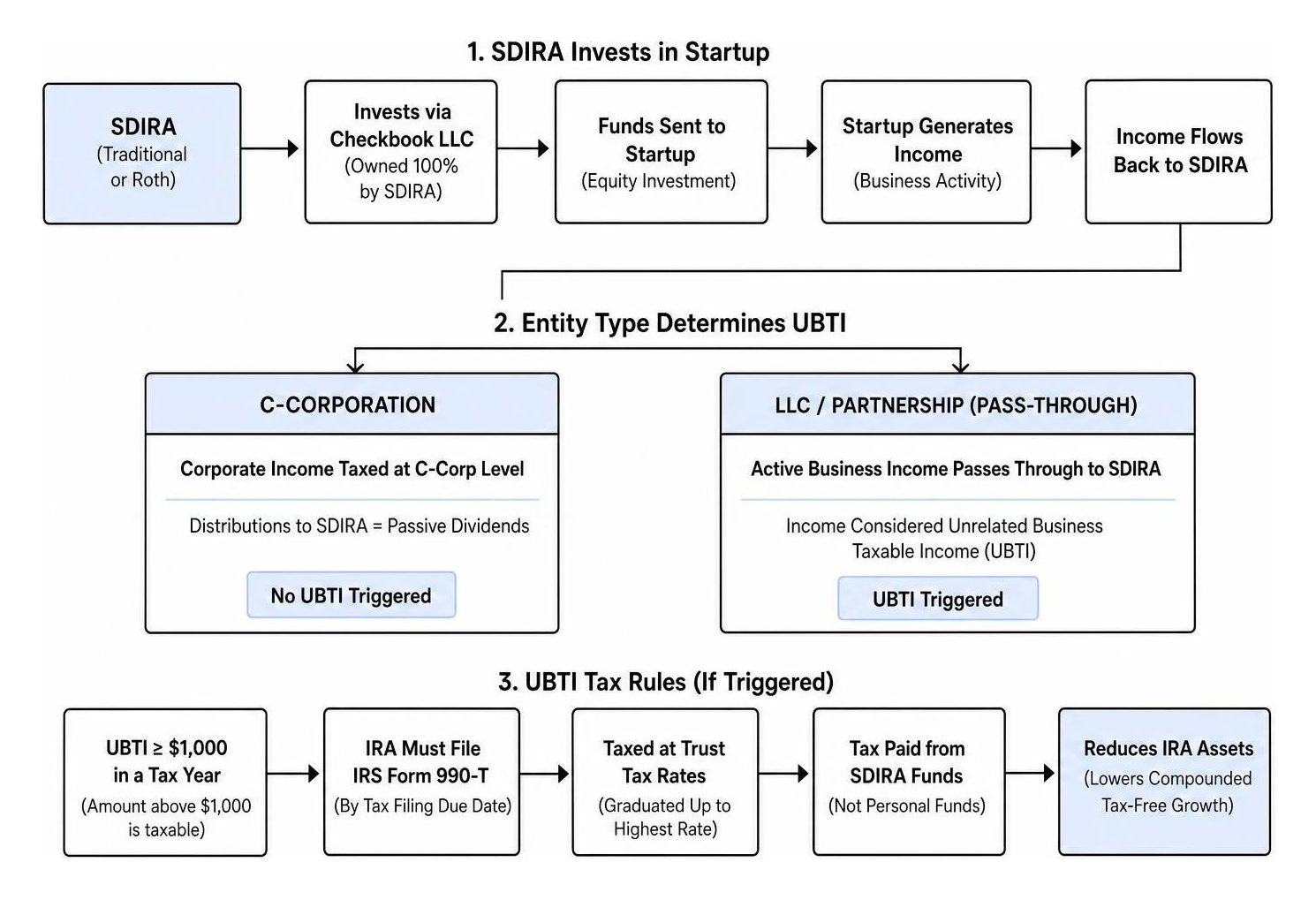
While IRAs are generally exempt from income taxes, they are subject to UBTI if they generate income from an active trade or business rather than passive investment sources (like dividends, interest, or royalties).
- C-Corporations: If the startup is structured as a C-Corp, the company pays corporate income taxes, and any distributions to shareholders are paid as passive dividends. No UBTI is triggered.
- LLCs and Partnerships: If the startup is structured as a pass-through entity (like an LLC or a partnership), its active business income flows directly through to the owners. If your SDIRA owns a stake in a pass-through startup, that active business income flows to your IRA and triggers UBTI.
If your SDIRA earns $1,000 or more of UBTI in a single tax year, the amount above $1,000 is taxable. The IRA itself must file IRS Form 990-T and pay tax at the trust tax rates, which quickly climb to the highest federal tax bracket. This tax must be paid directly from the SDIRA’s funds, not from your personal bank account.
Before committing your retirement funds to a startup structured as an LLC, it is critical to perform deep due diligence. For more on navigating complex tax structures in alternative investments, read our beginners guide to self-directed ira hedge funds.
Before You Move Retirement Funds
Investing your IRA in startups is a high-conviction move that may offer significant financial rewards, but the margin for error is razor-thin. A single misstep can disqualify your entire account, leaving you with an unexpected tax bill and steep penalties.
At Independent IRA, an Authorized Agent of Accuplan, we specialize in helping investors navigate these complexities. We assist with entity facilitation for Checkbook LLCs and administrative support to help you maintain compliance with IRS regulations.
Whether you are exploring raising private capital iras or other IRS-permitted assets, we are here to help facilitate the process. Brian Davis and our team can assist you in establishing the administrative structures for your self-directed account.
Before you make any moves with your retirement capital, let’s make sure your structure is built to last. Request a call back or contact our team today to discuss your investment goals.
This content is for informational and educational purposes only and does not constitute legal, tax, or investment advice. Rules, limits, and requirements may change. Consult a qualified tax advisor, attorney, or financial professional before making retirement planning or investment decisions. Independent IRA is an Authorized Agent of Accuplan Benefits Services and is not a custodian or trust company.
Frequently Asked Questions About SDIRA Startup Investing
Can an IRA invest in an S-Corporation?
No, an IRA cannot invest in an S-Corporation. Under IRS rules, an S-Corp is restricted to having only specific types of shareholders, which must be individual U.S. citizens or certain qualified trusts. An SDIRA does not qualify as an eligible shareholder. If an SDIRA purchases shares in an S-Corp, the company’s S-Corp status is immediately terminated, triggering severe tax consequences for all shareholders.
What happens to my IRA if a prohibited transaction occurs?
If you engage in a prohibited transaction, the IRS will disqualify your entire IRA. The account loses its tax-exempt status as of January 1st of the year the transaction took place. The entire fair market value of the IRA is treated as a taxable distribution to you. You will owe ordinary income tax on the full balance, and if you are under age 59½, you will also face a 10% early withdrawal penalty.
Can I write off startup losses inside my self-directed IRA?
No. Because SDIRAs are tax-advantaged accounts, you cannot claim personal tax write-offs for investment losses incurred within the account. If a startup investment fails and the shares become worthless, the loss is contained entirely within the tax shelter of the IRA. While this means you do not pay taxes on gains, it also means you get no tax relief for losses.