

 GIVE US A CALL

If your retirement account limits you to conventional stocks and bonds, allocating capital to alternative asset classes like real estate can diversify your holdings into tangible assets. Beyond standard residential rentals and office buildings, niche property sectors such as data centers, senior housing, manufactured housing communities, and self-storage offer unique demand drivers and risk profiles. A self-directed IRA can hold eligible real estate investments, though investors must carefully evaluate liquidity, transaction expenses, and IRS compliance rules before acquiring property. This guide compares key sectors to help you evaluate how alternative real estate may fit into a broader retirement portfolio strategy.
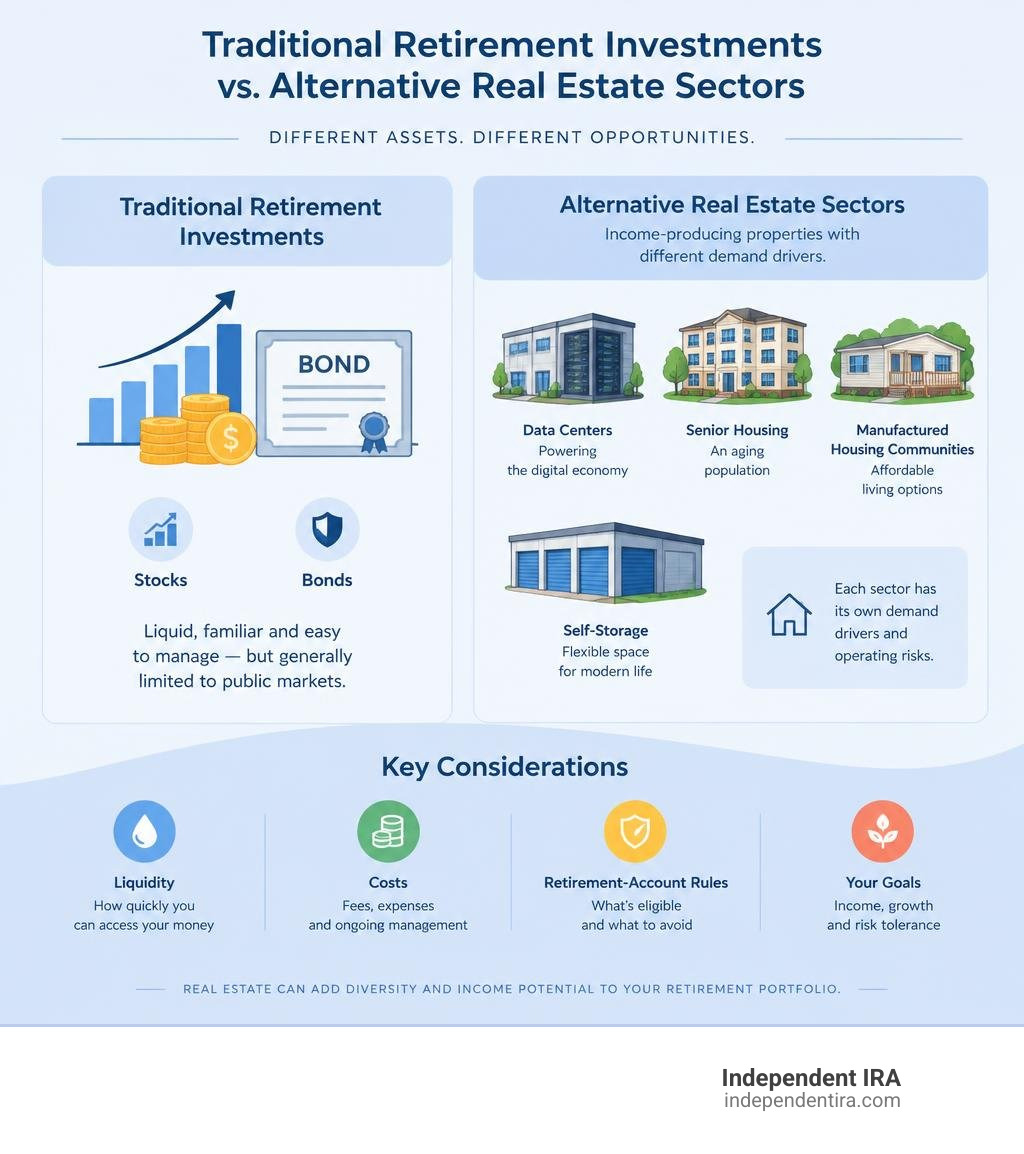
Understanding Alternative Asset Classes: Real Estate for Self-Directed Portfolios

When we talk about alternative asset classes, we mean any investment that sits outside public equities, fixed-income bonds, and cash equivalents. Among these options, commercial real estate in the United States stood at an estimated $27 trillion valuation in the first half of 2024, making it the country’s third-largest asset class behind publicly traded stocks and government debt.
Unlike a digital stock ticker or a corporate bond, real estate is a tangible physical asset with intrinsic land and replacement value. It is an asset class tied directly to physical property.
For self-directed retirement investors, physical property provides three primary portfolio characteristics:
- Low Equity Beta and Market Independence: Private real estate moves according to local supply, tenant demand, and occupancy fundamentals rather than daily emotional swings on Wall Street.
- Reduced Volatility via Private Valuations: Because private assets are appraised periodically rather than priced tick-by-tick every second, they shield long-term retirement capital from artificial pricing whipsaws.
- Contractual Cash Flow Stability: Returns stem from binding, multi-year lease agreements signed by commercial or residential tenants, ensuring steady net operating income (NOI).
Institutions have relied on these characteristics for decades. In the educational guide from CAIS Group on the foundations of alternative investments, real estate is highlighted as a foundational building block for reducing equity market correlation while delivering dependable yield.
Why Alternative Asset Classes Like Real Estate Outperform Public Markets
Public markets can deliver long-term growth, but they also bring sharp drawdowns. While the S&P 500 generated an average annualized return of roughly 9.96% from 1928 through early 2025, that performance required enduring major crashes and sustained bear markets. Over that same timeframe, a $100 investment in Treasury bonds grew to just about $7,159, barely pacing inflation after taxes.
Among alternative asset classes, real estate stands apart because over two-thirds of target returns in core real estate are driven directly by cash income rather than speculative capital appreciation.
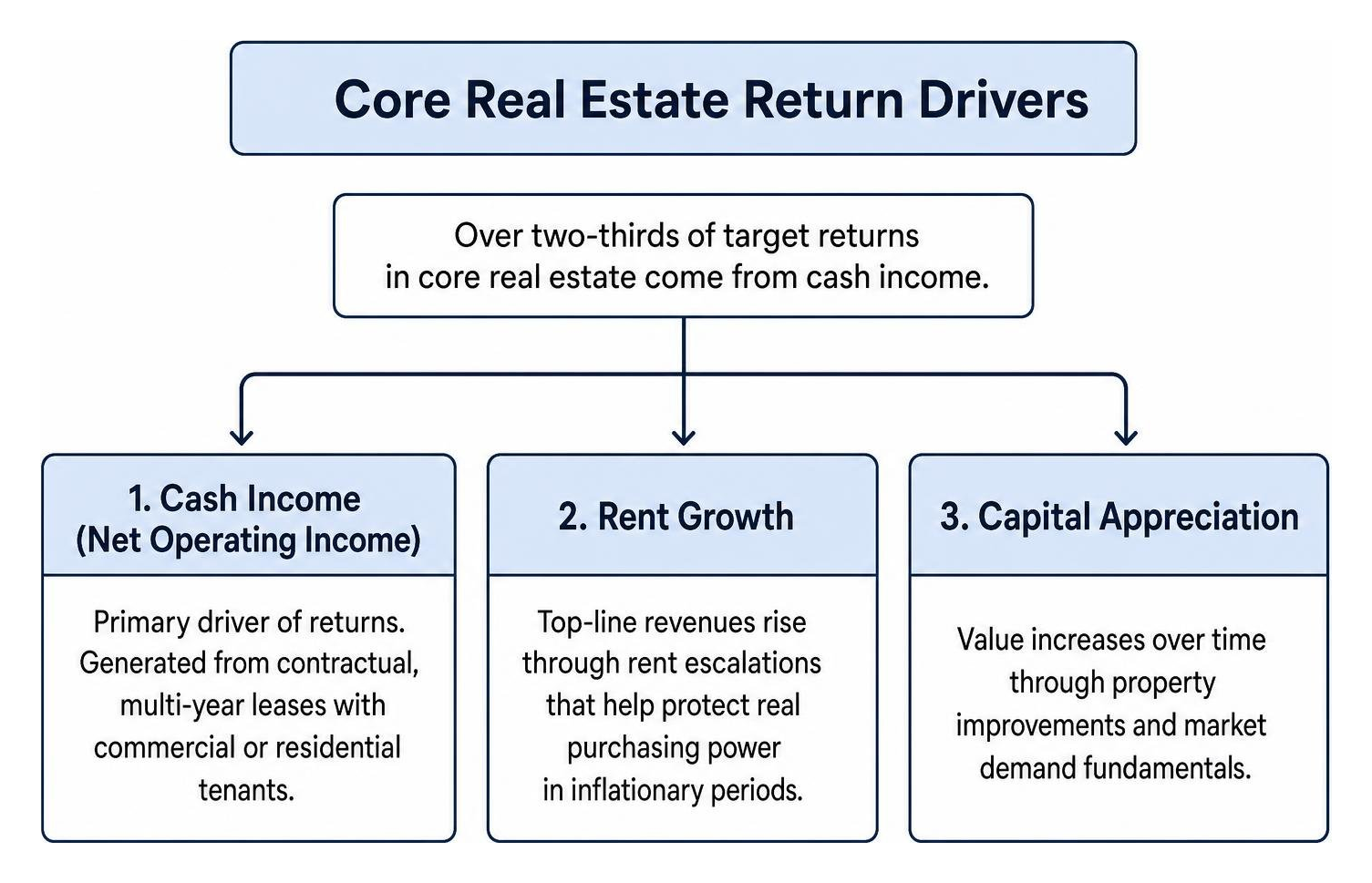
Furthermore, real estate is one of the few resilient asset classes in the face of inflation. When consumer prices surge, landlords adjust top-line revenues through dynamic rent escalations, protecting real purchasing power. When you couple inflation-linked cash flow with deploying tax-advantaged capital through a self-directed IRA, your rental income and eventual sales proceeds compound without annual tax drag.
Property Classes and Investment Strategies: Core to Distressed
Not all property carries the same risk profile. Institutional investors classify buildings into three physical tiers and five investment strategies:
- Class A: Newer construction, premier urban or suburban locations, high-end amenities, and creditworthy tenants. They command premium rents and carry lower risk but offer lower initial cap rates.
- Class B: Functional properties aged 10–30 years. They attract working-class tenants, offer steady cash flow, and present prime opportunities for value-add renovations.
- Class C: Properties aged 30+ years that need deferred maintenance. They offer higher nominal cap rates but carry higher tenant turnover and operational complexity.
Depending on your retirement timeline, you can align these properties with distinct risk-return strategies:
- Core (0–30% Leverage): Low-risk, stabilized assets in prime locations producing immediate, predictable yield.
- Core-Plus (30–55% Leverage): High-quality properties with minor leasing or operational upside, balancing cash flow with modest capital growth.
- Value-Add (50–65% Leverage): Properties requiring physical renovations, operational turnarounds, or re-tenanting to lift NOI into double-digit targeted internal rates of return (IRR).
- Opportunistic & Distressed (60%+ Leverage): Ground-up development, adaptive reuse, or acquiring distressed notes and foreclosed assets seeking high-teens to 20%+ IRRs.
When choosing higher-yield strategies within your retirement account, make sure you understand the compliance baseline by reviewing our A-Z guide to SDIRA real estate rules before signing purchase contracts.
6 High-Performing Niche Real Estate Sectors Reshaping Portfolios in 2026
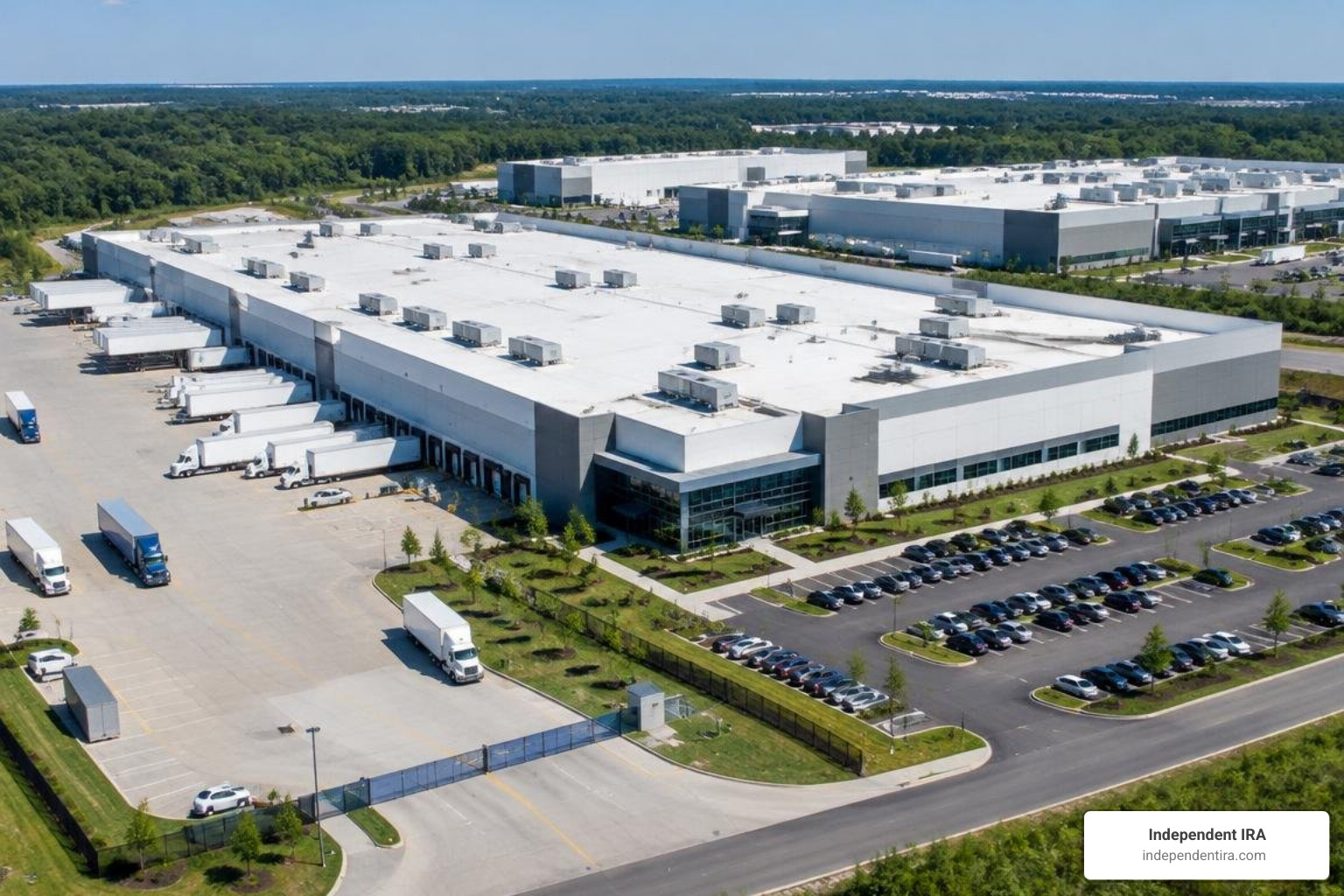
While traditional office buildings and enclosed shopping malls have faced structural headwinds, institutional capital has aggressively expanded into specialized property sectors. Niche property categories now account for roughly 30% of the institutional investable real estate universe—totaling over $3.6 trillion.
Major benchmark indices are adapting: alternative sectors make up roughly 50% of the FTSE Nareit US Real Estate Index, while core private funds tracked by NCREIF have expanded their allocation limits up to 25% for non-traditional assets. As highlighted by Urban Land Magazine’s analysis on alternative property diversification, investors are prioritizing sectors backed by secular demographic and technological megatrends.
1. Data Centers and Digital Infrastructure
The explosion of artificial intelligence, cloud computing, and enterprise software has created record demand for specialized digital infrastructure. Hyperscale data centers require massive power capacity, advanced liquid cooling, and redundant fiber connectivity.
- Performance & Demand: Data centers delivered an 11.2% total return within the NCREIF Property Index in 2024, outperforming a flat broader index.
- Occupancy Dynamics: North American data center vacancy hovers near historic lows just above 1%, with annual rental growth exceeding 20% in constrained primary power markets.
- SDIRA Fit: Retirement investors often access data centers through private equity syndications or customized private funds that secure long-term, triple-net leases with creditworthy technology tenants.
2. Senior Housing and Healthcare Facilities
The retirement of the baby-boomer generation—often termed the “silver tsunami”—is driving a structural, needs-based demand wave for assisted living, memory care, and medical office buildings (MOBs).
- Performance & Drivers: Senior housing posted a 5.6% return in 2024, with select sub-markets reporting net operating income growth two to three times higher than conventional multi-family housing.
- Operational Profile: Senior housing is an operationally intensive asset class that pairs real estate with hospitality and specialized healthcare licensing.
- Resilience: Because senior care is a necessity rather than a discretionary luxury, occupancy remains durable throughout economic downturns.
3. Manufactured Housing Communities and Mobile Home Parks
Manufactured home communities provide unsubsidized, affordable housing for millions of Americans amid an acute national housing shortage.
- High Cap Rates: Mobile home parks boast the highest national capitalization rates of any real estate niche, averaging between 7% and 10%.
- Market Outperformance: Manufactured housing generated an 11.7% return in 2024, leading major institutional real estate categories.
- Operational Advantages: In most communities, the resident owns the manufactured home and rents only the underlying land pad. This creates remarkably low tenant turnover and eliminates interior maintenance expenses for the park owner.
4. Single-Family Rentals (SFR) and Build-to-Rent
Millennials forming families and priced out of homeownership by high mortgage rates have fueled sustained demand for single-family rental homes and purpose-built rental communities.
- Occupancy & Retention: SFR properties consistently maintain high occupancy and lower annual turnover compared to high-density urban apartments.
- Direct Retirement Ownership: SDIRA investors can hold individual rental properties directly with cash or non-recourse financing. If you are considering direct property management via third-party operators, read our guide on evaluating if your IRA is ready to become a landlord.
5. Self-Storage and Cold Storage Facilities
Self-storage and temperature-controlled cold storage facilities benefit from continuous supply-chain adjustments and life-event transitions (moving, downsizing, marriage, and estate settlements).
- Lease Agility: Self-storage operates on month-to-month leases, allowing operators to adjust pricing dynamically to stay ahead of inflation.
- Low Overhead: Properties require minimal capital expenditure, have no plumbing inside individual units, and rely on automated gate systems that keep staffing costs low.
- Cold Storage Growth: The expansion of online grocery delivery and pharmaceutical distribution has made refrigerated logistics facilities a resilient, high-barrier niche.
6. Tax Liens, Deeds, and Real Estate Debt
For retirement investors who prefer not to manage physical buildings, real estate tax liens and debt instruments provide predictable yield backed by real property.
- Statutory Interest: Delinquent property tax liens offer double-digit statutory interest rates (often 12% to 24%, depending on county regulations).
- First-Lien Security: Tax liens take super-priority over standard mortgages. With national foreclosure rates hovering around 2%, most property owners redeem the lien, returning your principal alongside accrued interest.
- Executing at Auctions: Self-directed accounts can bid directly on liens and deeds; learn how to navigate these sales using our pro tips for winning county tax auctions.
- Private Notes: You can also deploy capital as a private lender by issuing IRA-backed promissory notes secured by real estate.
Real Estate vs. Private Equity, Private Credit, and Infrastructure
To build a balanced retirement portfolio, you need to understand how real estate compares to other private market asset classes:
| Metric | Real Estate (Core/Value-Add) | Private Equity (Buyout/Growth) | Private Credit / Direct Lending | Infrastructure (Core) |
|---|---|---|---|---|
| Primary Return Source | Contractual Lease Income + Appreciation | Capital Appreciation on Exit | Floating-Rate Interest Yield | Regulated Cash Flows & User Fees |
| Target Return (Net IRR) | 8% – 16% | 15% – 25% | 8% – 12% | 7% – 12% |
| Income Distribution | High (Quarterly/Monthly) | Low (Back-ended via exits) | High (Monthly/Quarterly) | Moderate to High |
| Liquidity Profile | Illiquid (3–7 Year Holds) | Highly Illiquid (7–10 Year J-Curve) | Moderate (2–5 Year Terms) | Highly Illiquid (10–25 Year Holds) |
| Inflation Protection | Strong (Rent escalations) | Variable (Margin dependent) | Moderate (Floating base rates) | Strong (CPI-linked contracts) |
| Underlying Collateral | Tangible Real Property | Corporate Equity Shares | Corporate Assets / Real Liens | Essential Public/Utility Assets |
Comparing Private Debt and Direct Lending with Real Assets
While equity real estate captures long-term appreciation, private debt and direct lending focus on capital preservation and consistent income. Private credit funds and direct lenders issue first-mortgage bridge loans, mezzanine debt, or preferred equity to real estate operators.
By positioning your capital at lower leverage points in the capital stack (such as 55% to 65% loan-to-value), you gain substantial downside equity cushion. If a borrower defaults, your retirement account holds the legal right to foreclose and take title to the physical asset. You can explore this passive strategy further by reviewing our overview of allocating self-directed funds to private equity and private lending.
Structuring Alternative Real Estate Assets in an SDIRA
To hold alternative real estate inside a retirement plan, you must establish an eligible Self-Directed IRA or a Self-Trusteed Solo 401(k) administered through a qualified custodian, with administrative support from an Authorized Agent such as Independent IRA.
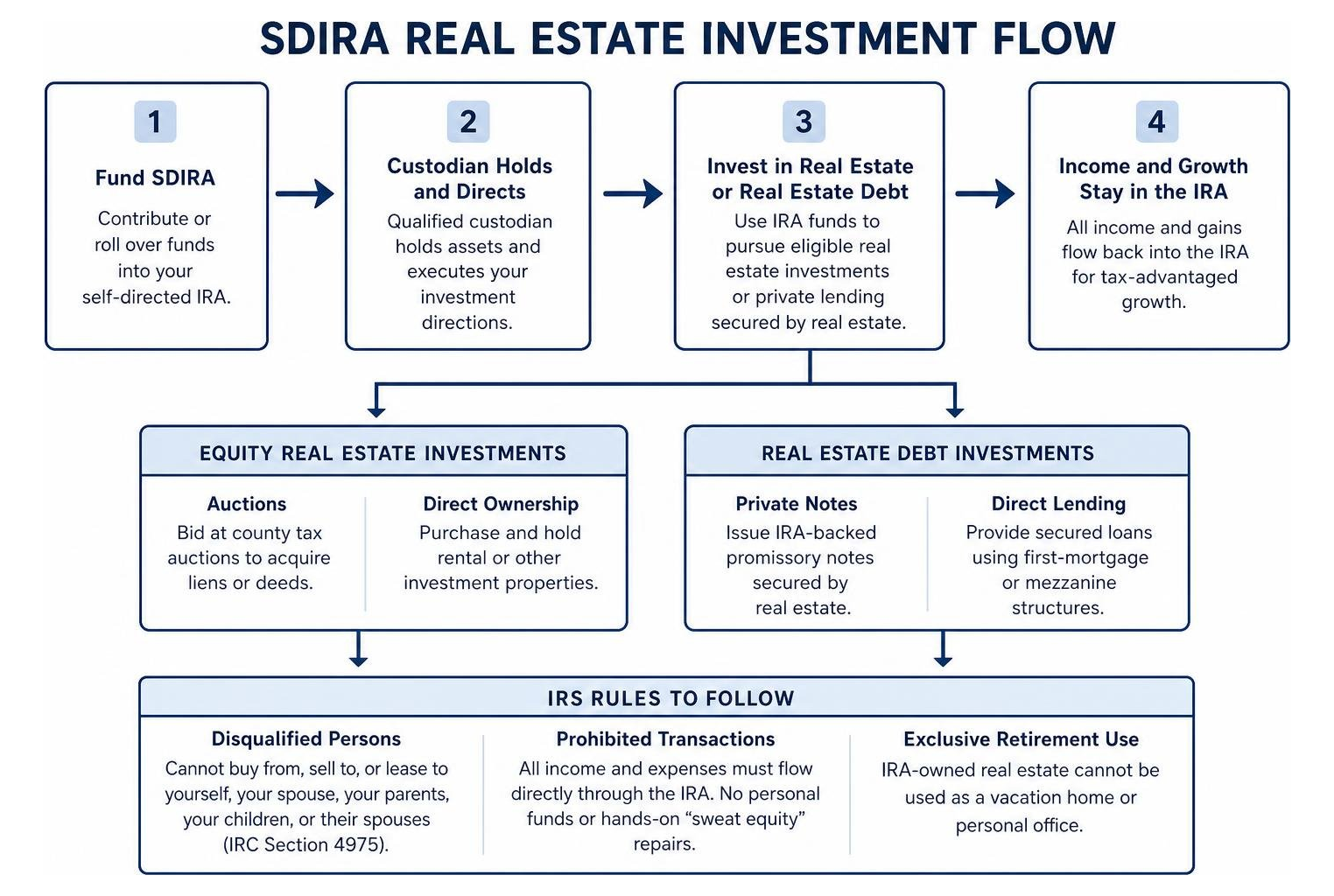
When structuring these investments, keep these IRS rules top of mind:
- Disqualified Persons: You cannot buy property from, sell property to, or lease property to yourself, your spouse, your parents, your children, or their spouses (IRC Section 4975).
- Prohibited Transactions: All income and expenses must flow directly through the IRA. You cannot perform hands-on “sweat equity” repairs or pay for maintenance out of personal bank accounts.
- Exclusive Retirement Use: Real estate held by your IRA cannot be used as a vacation home or personal office, as explained in our guide on why your IRA property cannot double as personal lodging.
- Roth Compounding: Using a self-directed Roth IRA allows your rental cash flows and long-term capital gains to compound tax-free; discover these guidelines in our in-depth guide to Roth IRA real estate investing rules.
Our team, including founder Brian Davis, regularly helps clients coordinate checkbook control entities and custodian-to-custodian transfers to streamline private real estate transactions.
Frequently Asked Questions About Alternative Real Estate Assets
What makes real estate an alternative asset class compared to stocks and bonds?
Real estate is a tangible, physical asset that behaves independently from public stock and bond markets. While stocks derive value from corporate earnings multiples and bonds depend on interest-rate movements, real estate returns come primarily from binding contractual lease agreements and physical land scarcity. This structure provides direct inflation hedging and lower volatility than public markets.
Can I hold non-traditional real estate sectors inside a Self-Directed IRA?
Yes. The IRS allows self-directed retirement accounts to hold virtually any type of real estate, including data centers, senior housing communities, mobile home parks, self-storage facilities, single-family rentals, farmland, and tax liens. You can hold title directly through your IRA custodian or invest passively as a Limited Partner (LP) in a real estate syndication or private placement.
Which alternative property types have generated the strongest returns in recent years?
In recent reporting, manufactured housing communities (11.7% total return in 2024) and data centers (11.2% total return) led the NCREIF Property Index. Both sectors benefit from structural demand tailwinds: manufactured housing solves a critical affordable housing shortage, while data centers serve surging artificial intelligence and cloud computing infrastructure needs.
What are the main tax implications of investing in alternative real estate via an IRA?
When your IRA purchases real estate using 100% cash, all rental income and capital gains return to the account fully tax-deferred (Traditional IRA) or tax-free (Roth IRA). However, if your IRA acquires property using non-recourse debt leverage, the portion of profits attributable to the loan may be subject to Unrelated Debt-Financed Income (UDFI) tax under the Unrelated Business Taxable Income (UBTI) rules. Solo 401(k) plans enjoy an exemption from UDFI on debt-financed real estate acquisitions under IRC Section 514(c)(9).
Before You Move Retirement Funds
Relying solely on a traditional 60/40 stock and bond portfolio leaves your retirement savings exposed to public market volatility and inflation drag. Incorporating alternative real estate sectors—from high-yielding mobile home parks and recession-resilient senior housing to mission-critical data centers—allows you to build a portfolio centered on tangible cash flow and physical assets.
At Independent IRA, an Authorized Agent of Accuplan Benefits Services, we provide administrative assistance, checkbook control setup, and support for self-directed IRA and Solo 401(k) structures so you can invest in IRS-permitted real estate assets with confidence.
Take the next step in evaluating your retirement strategy by scheduling a personalized consultation for real estate self-directed accounts with our team today.
This content is for informational and educational purposes only and does not constitute legal, tax, or investment advice. Rules, limits, and requirements may change. Consult a qualified tax advisor, attorney, or financial professional before making retirement planning or investment decisions. Independent IRA is an Authorized Agent of Accuplan Benefits Services and is not a custodian or trust company.